Short Answer
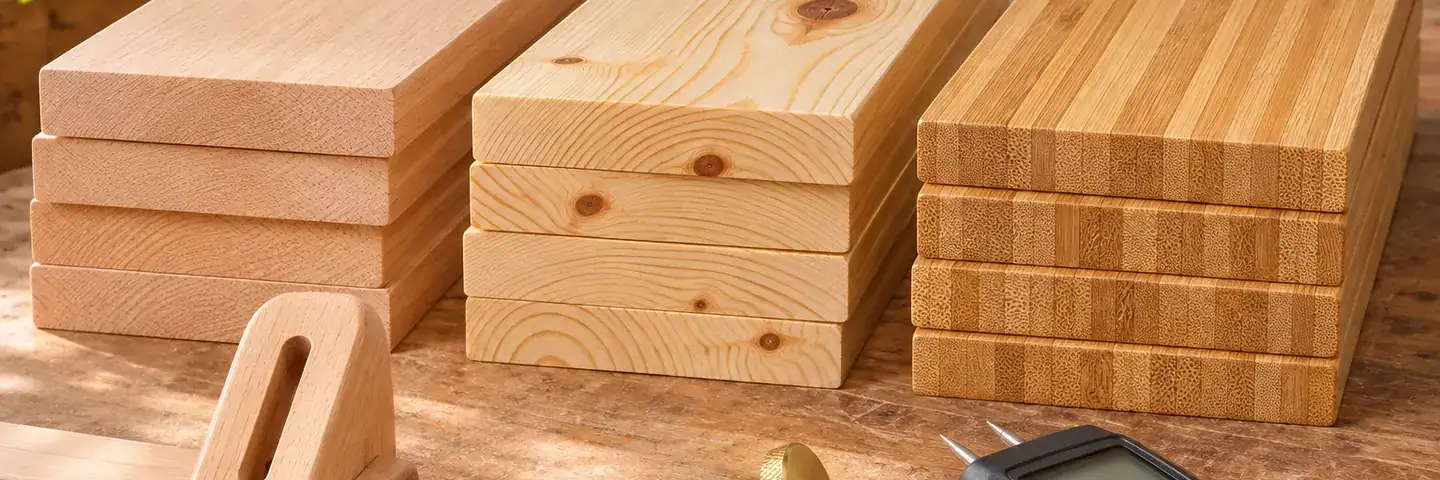
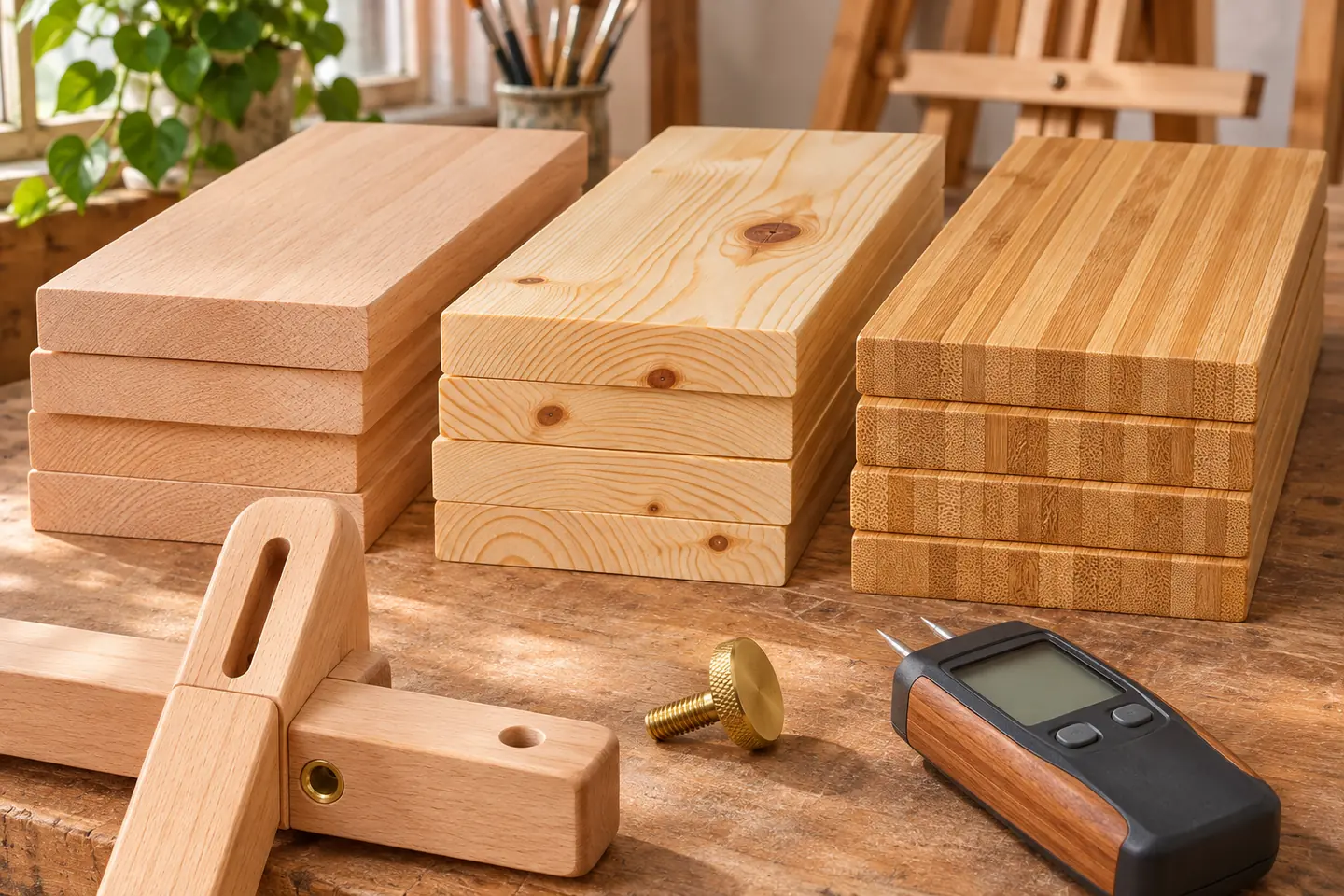
Beech is the best wood for heavy-duty studio easels because it is hard, dense and stable; pine is lighter and cheaper, which suits display and classroom easels; bamboo is lightweight, hard-wearing and a good choice for tabletop and box easels.
Why the timber decides the easel
An easel is a simple machine: a mast, legs, a sliding canvas holder and a locking system. The wood determines how much weight it carries without racking, how well screws and knobs hold over years of adjustment, and how the finished product looks on a shop floor. For an importer it also decides carton weight, freight cost and price point.
Beech: the professional standard
European and Chinese beech is a dense hardwood with a fine, even grain. It holds threaded inserts and bolts well, so H-frame and heavy-duty studio easels made in beech stay rigid even with large canvases and frequent height changes. Beech takes lacquer and stain evenly, which is why most premium studio easels are beech with an oiled or clear lacquer finish.
- Best for: H-frame studio easels, heavy-duty easels with wheels, lyre easels and premium box easels.
- Trade-offs: heavier cartons and a higher material cost than pine.
Pine: light, affordable and easy to finish
Pine is a softwood, roughly a third lighter than beech. It is easier to machine and stain, which makes it a strong choice for display easels, kids easels, tripod easels and antique-brown box easels where the load is modest. Pine dents more easily, so hardware should be through-bolted rather than screwed directly into end grain.
- Best for: display and wedding easels, classroom and children's easels, tripod and A-frame easels.
- Trade-offs: softer surface and less load capacity.
Bamboo: hard-wearing and lightweight
Laminated bamboo is very hard on the surface, light, and has a distinctive striped look that customers associate with natural materials. It is well suited to tabletop and box easels, drawing boards and accessories. Because it is laminated, edge quality and glue lines must be checked during inspection.
Comparison at a glance
| Property | Beech | Pine | Bamboo |
|---|---|---|---|
| Hardness | High | Low-medium | High |
| Weight | Heavy | Light | Light-medium |
| Load capacity | Excellent | Moderate | Good (small formats) |
| Relative cost | Higher | Lower | Medium |
| Typical use | Studio, H-frame | Display, kids, tripod | Tabletop, box |
What to specify on a purchase order
- Species and moisture content: ask for kiln-dried timber, typically 8-12% moisture, to prevent warping in transit.
- Finish: clear lacquer, oil or stain color, with a physical finish sample approved before production.
- Hardware: knob material (zinc alloy, brass, plastic) and whether inserts are threaded metal.
- Maximum canvas height and mast height, measured on the approved sample.
- Packaging: flat-pack carton dimensions, inner protection and carton drop test.
Bottom line
Choose beech when the easel must carry large canvases for years, pine when weight and price matter more than load, and bamboo for compact tabletop products with a natural look. Our wooden easel range and table and box easels cover all three materials, and we can sample any of them with your logo.
Frequently Asked Questions
Is beech or pine better for an easel?
Beech is better for heavy-duty studio easels because it is harder and stronger; pine is lighter and more affordable for display and classroom easels.
Do bamboo easels last?
Yes. Laminated bamboo is hard-wearing and resists dents, making it durable for tabletop and box easels.